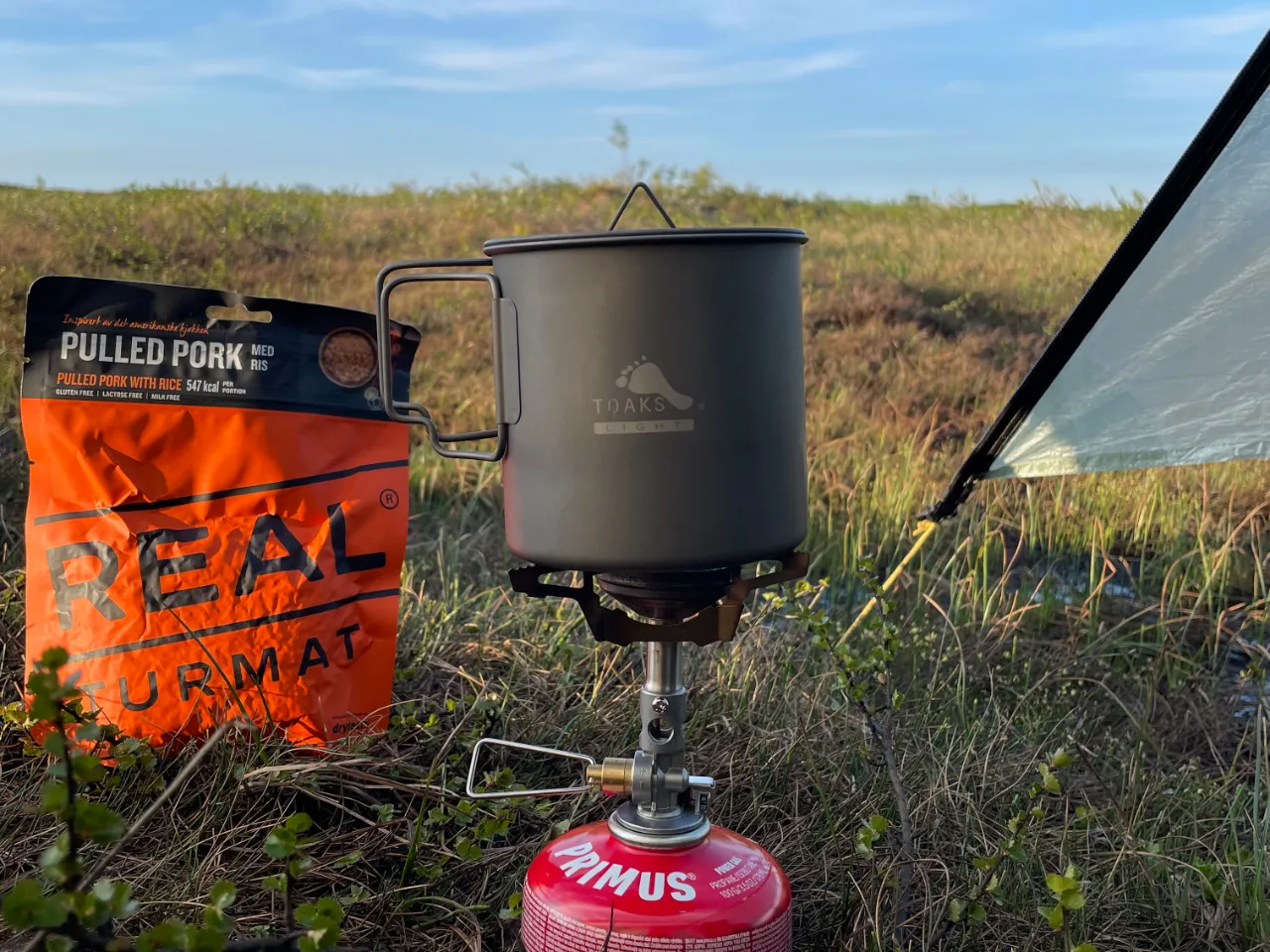
The three most important criteria in a hiking stove for me are portability (weight and size), fuel efficiency, and flexibility. Many of the canister stoves I’ve tried over the years fulfill two of those criteria, but they do so at the expense of the third one. For example, the Trangia Storm gas burner has terrific fuel efficiency when paired with the Trangia windshields, and it works well for any type of outdoor cooking, but it weighs a lot and is quite bulky. The Primus Lite stove system (similar to the Jetboil) is compact and very fast, but you won’t be making pancakes or anything else except boiling water with it.
The Soto WindMaster is the only hiking stove I’ve tried that gives you all three.
- It’s small enough to fit in most pots, and very lightweight at 60 grams without the pot stand. I pair it with the 7 gram TriFlex pot stand, which is sold separately. The TriFlex weighs a bit less than the included pot stand, packs smaller and is less fiddly.
- The concave design of the burner head and the raised lip surrounding it makes the WindMaster a lot more wind resistant than it would appear at first glance, and well deserving of its name. I never use a wind screen with my WindMaster. Soto says that it can bring 0.5 liters of water to a boil in less than 2 ½ minutes in windy conditions, and that matches my experience.
- Unlike most small hiking stoves, the intensity of the WindMaster flame can be kept quite low, allowing you to keep food simmering without the flame going out entirely. The concave burner head also spreads out the heat on the pot or pan you have on the stove, which makes the WindMaster work surprisingly well for cooking food given its size and weight.
I’ve used the WindMaster as my main spring, summer and fall stove for four years now, including on my 2023 thruhike of the Swedish mountains, and it’s held up really well. The WindMaster has a built-in piezo lighter which ignites the gas with a spark at the press of a button. It’s a convenient feature, but also a common point of failure. The piezo lighter on my WindMaster is still in working order, although it can sometimes take two or three presses to light the gas. I always bring a lighter, matches and/or a fire steel as a backup.
So yeah, the WindMaster is a great stove. It seems like I should include some sort of shortcoming here, but I struggle to come up with one. Maybe the price? It is pretty expensive, with an MSPR of $70. If you know you’ll get a lot of use out of it, it’s well worth the price tag.


